Kwiksell
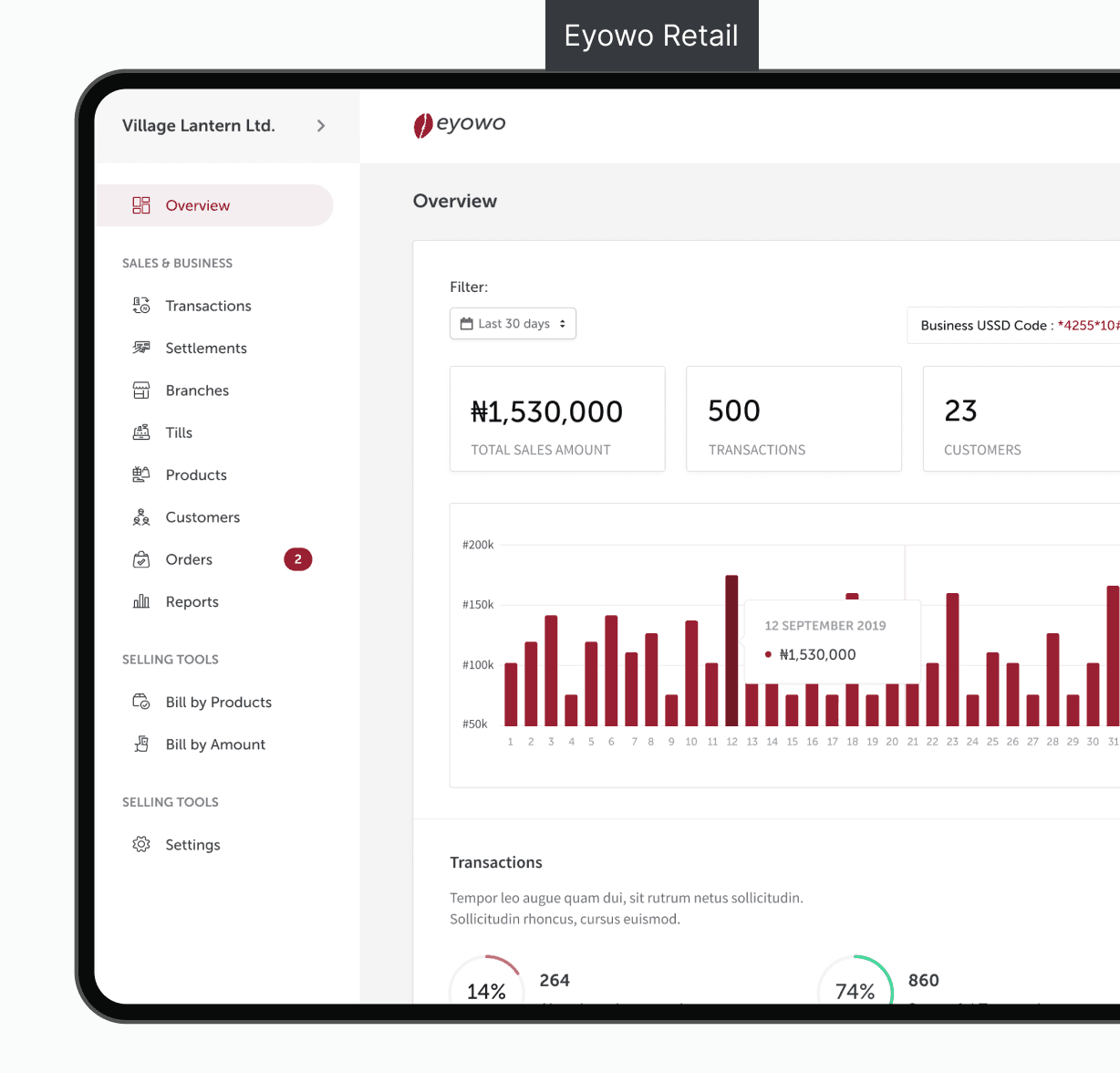
Eyowo Retail, now rebranded as Kwiksell, Initially aimed at small retailers, Kwiksell attracted a broader audience, including supermarkets and restaurants, due to its seamless sales and management features. By 2021, diverse use cases revealed the product's limitations, prompting numerous feature requests and user complaints, primarily from merchants, indicating a need for a comprehensive redesign to better serve its evolving user base.
Merchants encounter significant challenges with selling and collecting payments due to a cumbersome process on Eyowo retail. This leads to inefficiencies in order fulfilment and customer retention, inaccuracies in inventory data and reporting, and a lack of personalised experiences due to a one-size-fits-all approach.
✅ 40% increase in acquisition
✅ 85% increase in engagement
✅ 100% Increase in transactions
Product design
User Research
Facilitation
Product strategy
2 x Product designer
1 x Product manager
6 x Engineers
3 months
We conducted in-depth research with 18 merchants from 8 diverse industries. This research included remote and in-person interviews, as well as field study to observe their work environments firsthand.
The insight from our several studies was used to explore problem space a bit more by creating key deliverables UX deliverables and brainstorming solutions for the problems we identified
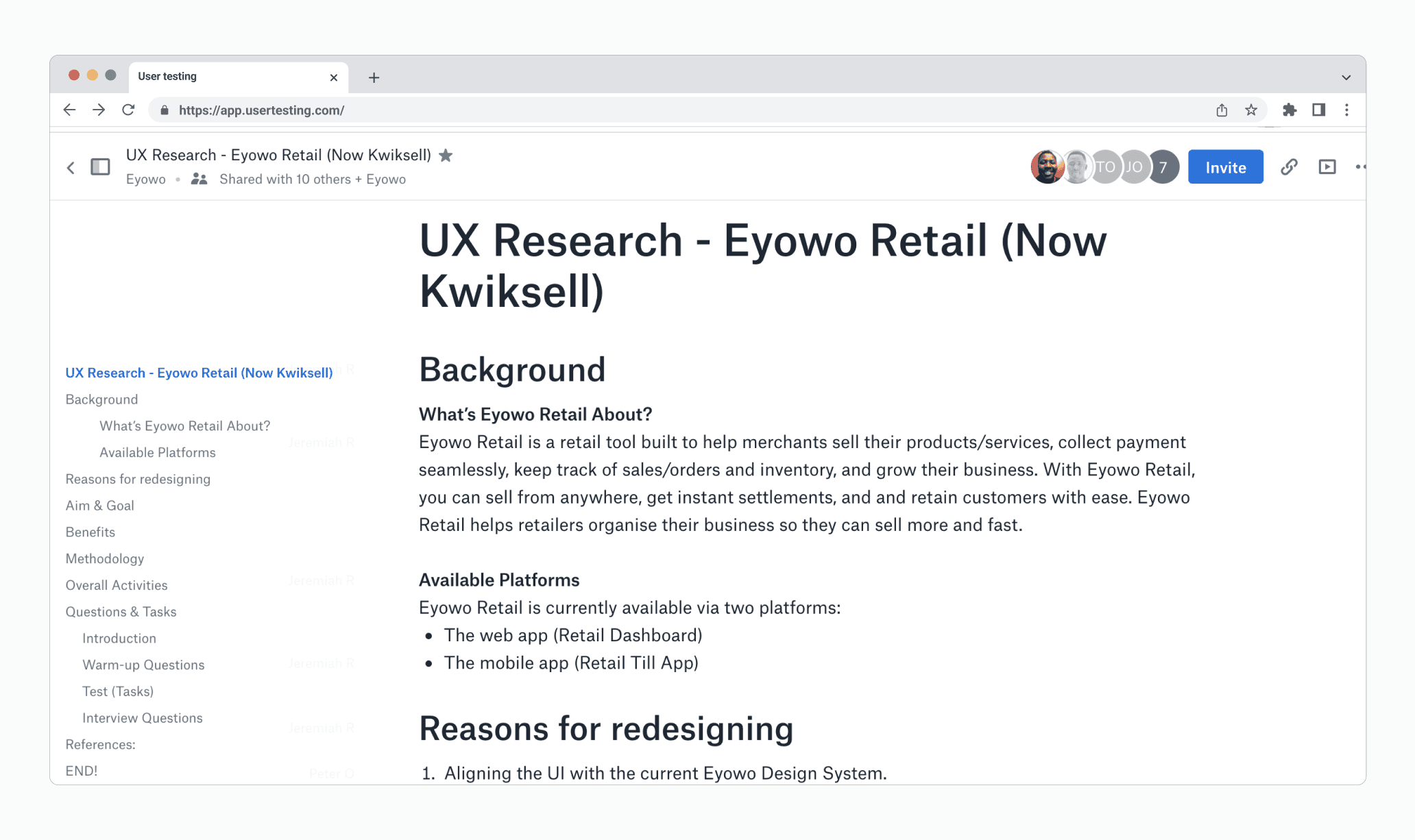
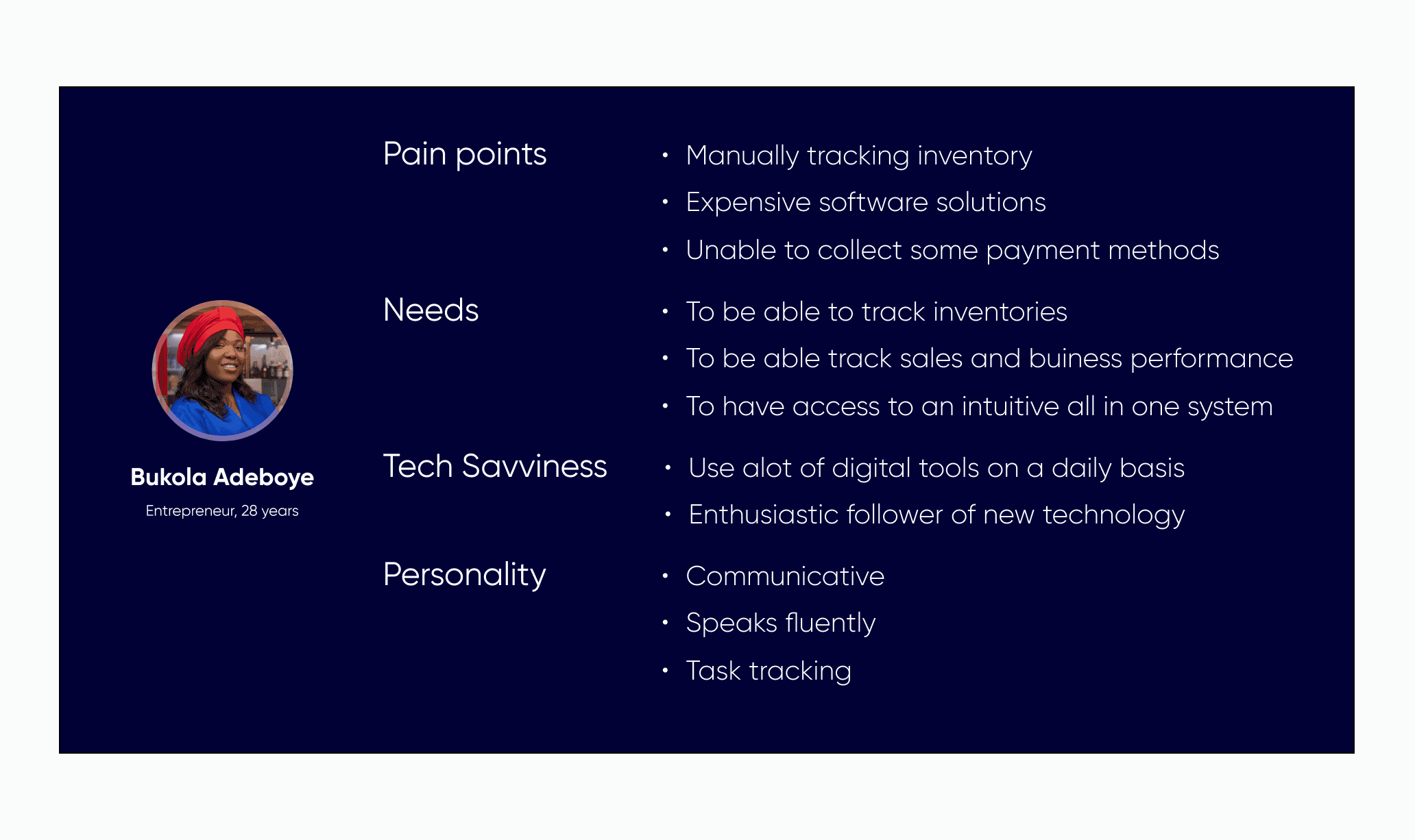
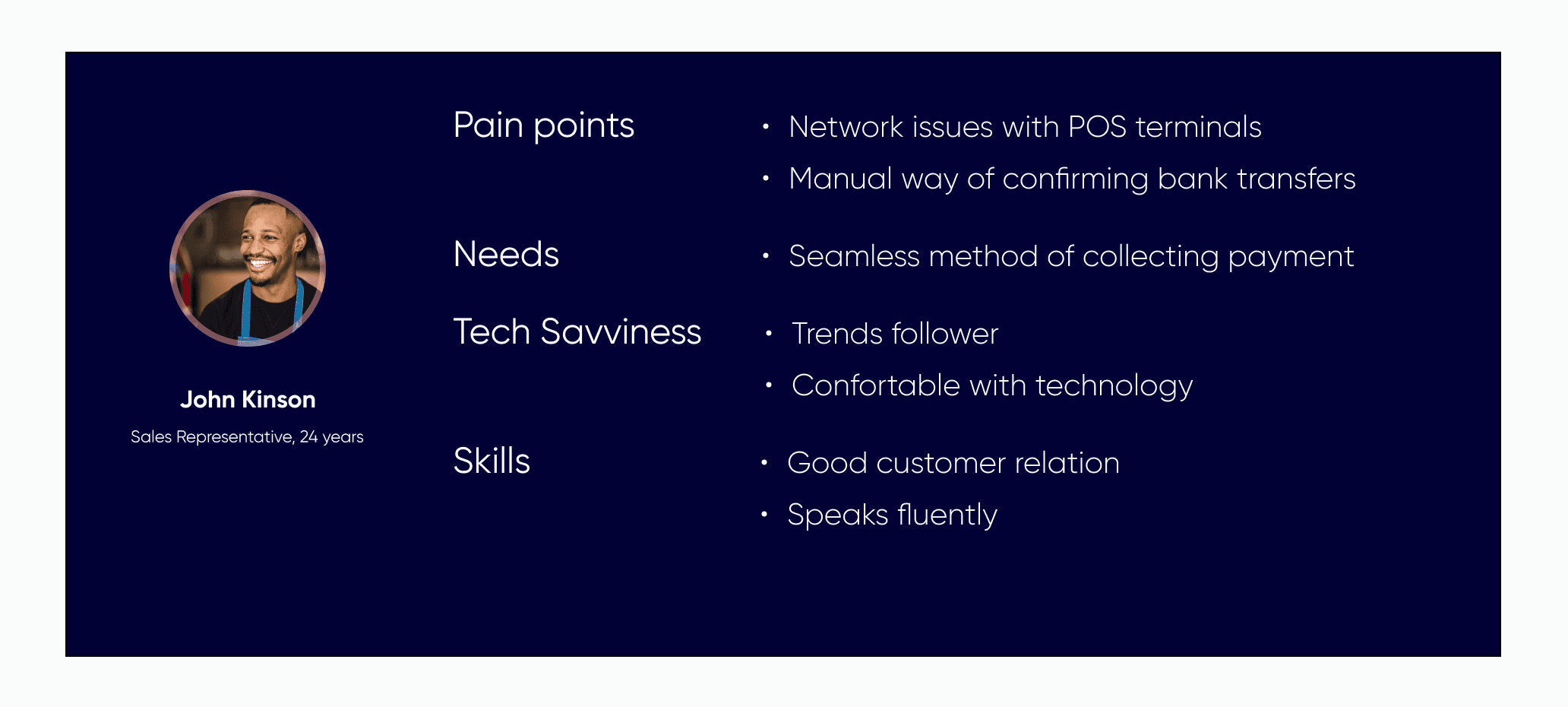
Through brainstorming sessions leveraging the 'How Might We' framework, we transformed research-identified challenges in selling, inventory, order fulfilment, customer retention, merchant experience, and payment collection into opportunities.
This resulted in a solution that prioritise convenience, accuracy, efficiency, personalisation, and scalability to empower merchants to sell faster and seamlessly grow their businesses.
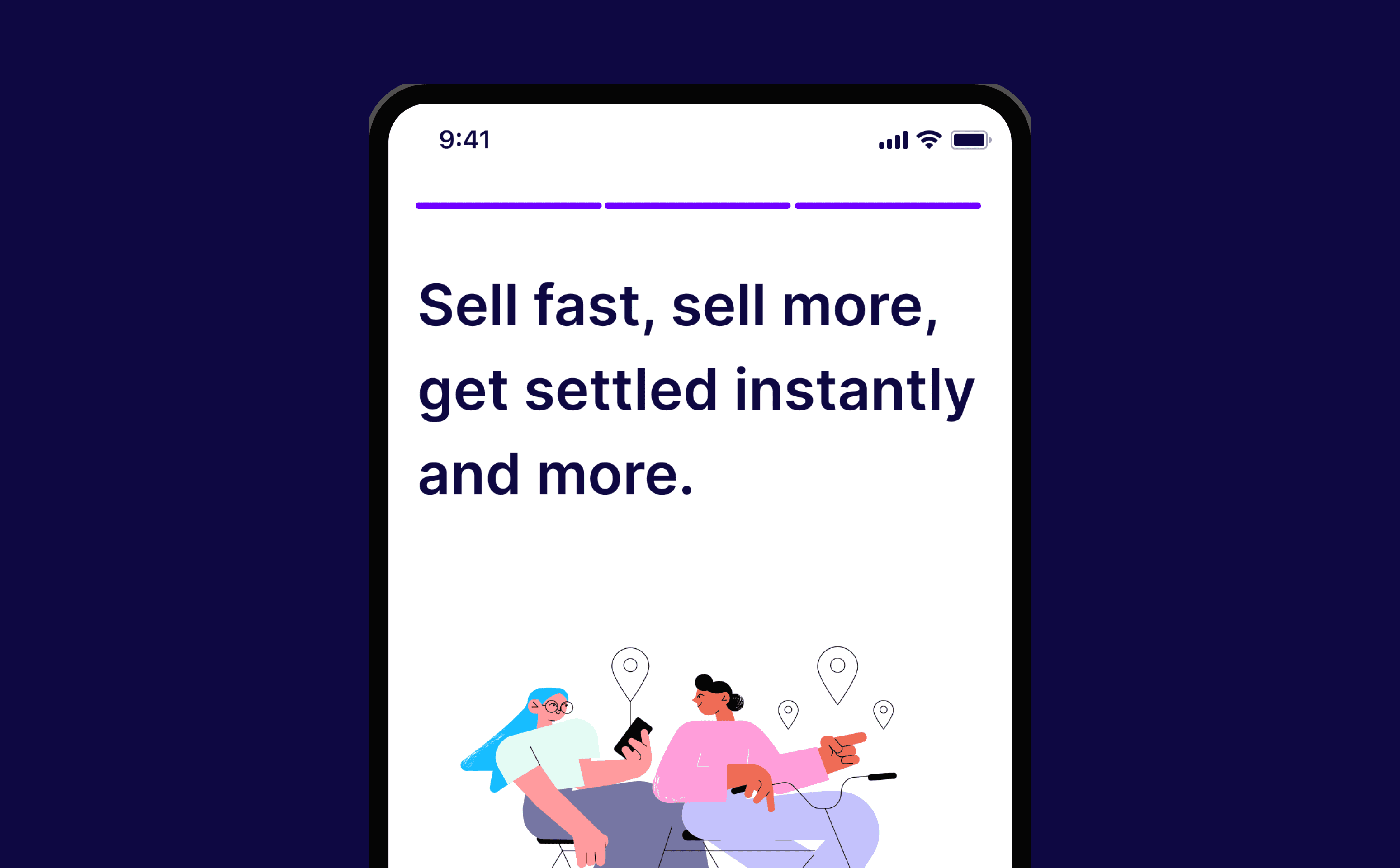
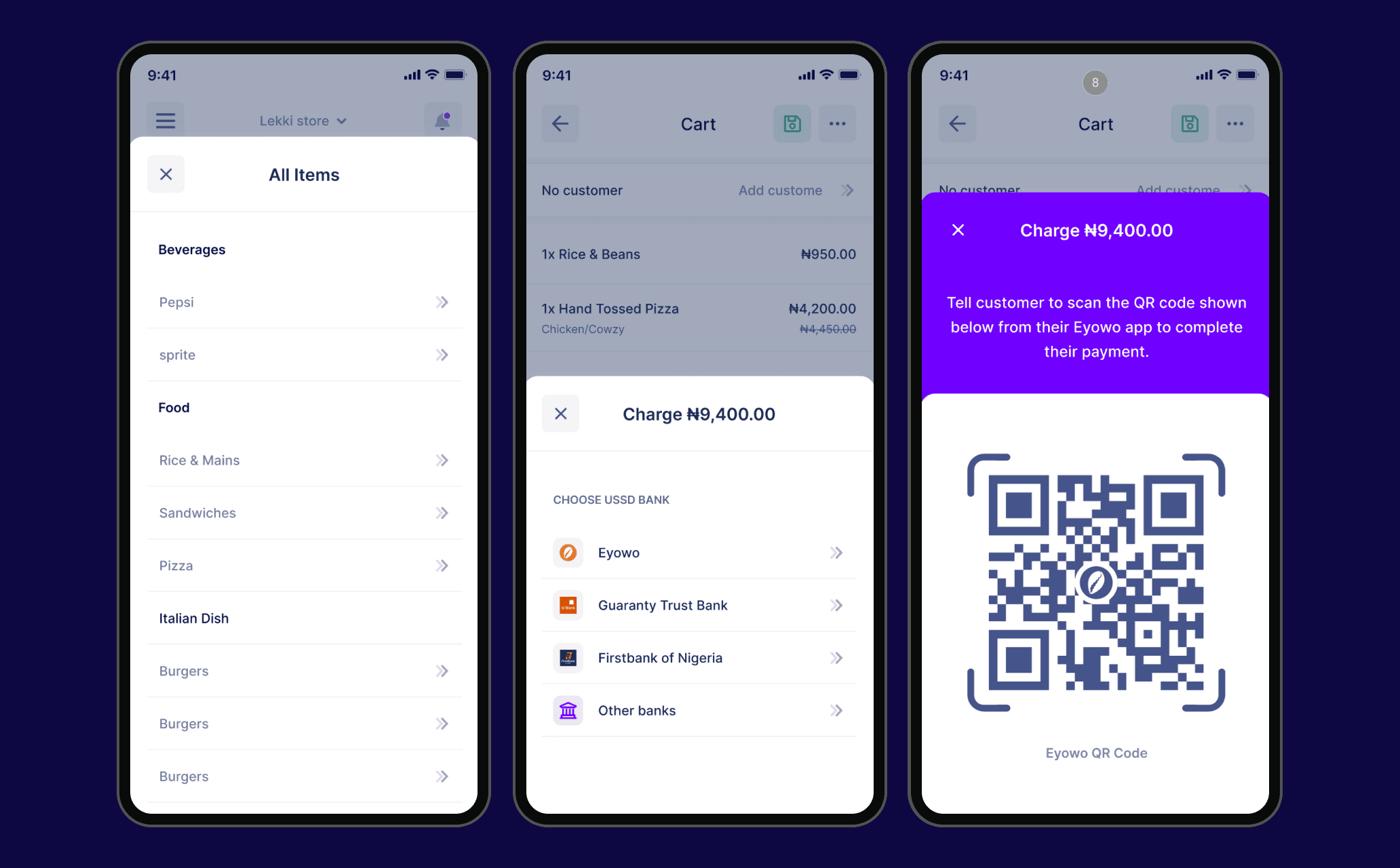
The order module displays a list of pending orders and the day's gross sales. When a specific order is opened, the user can view all the ordered items, the total amount, the order status, and the selected payment option.
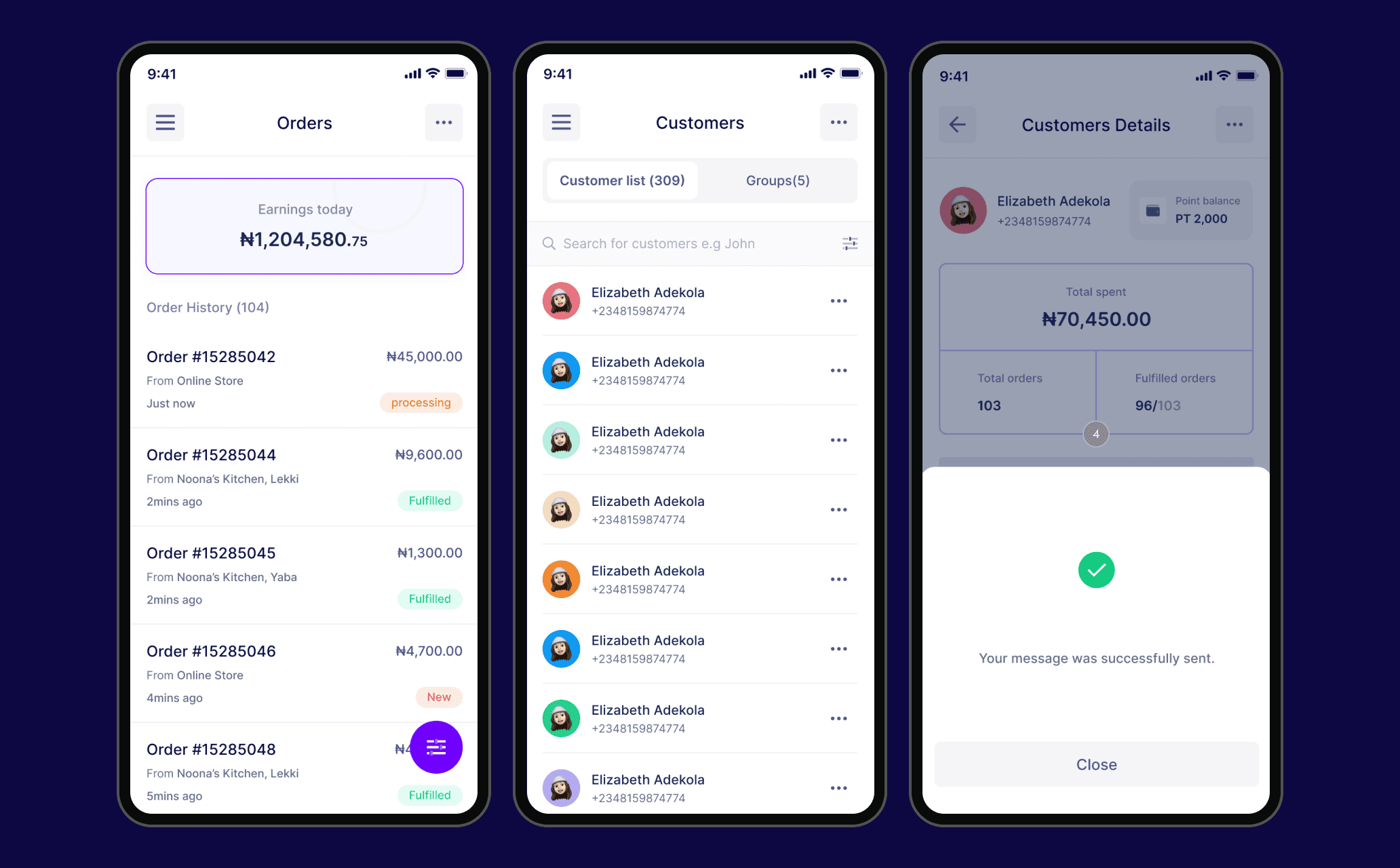
Merchants can track their customers' real-time behaviour, including total spending, first and last visits or purchases, and their preferred sales channels. Additionally, merchants can group customers and send them marketing, promotional, or special messages via SMS.
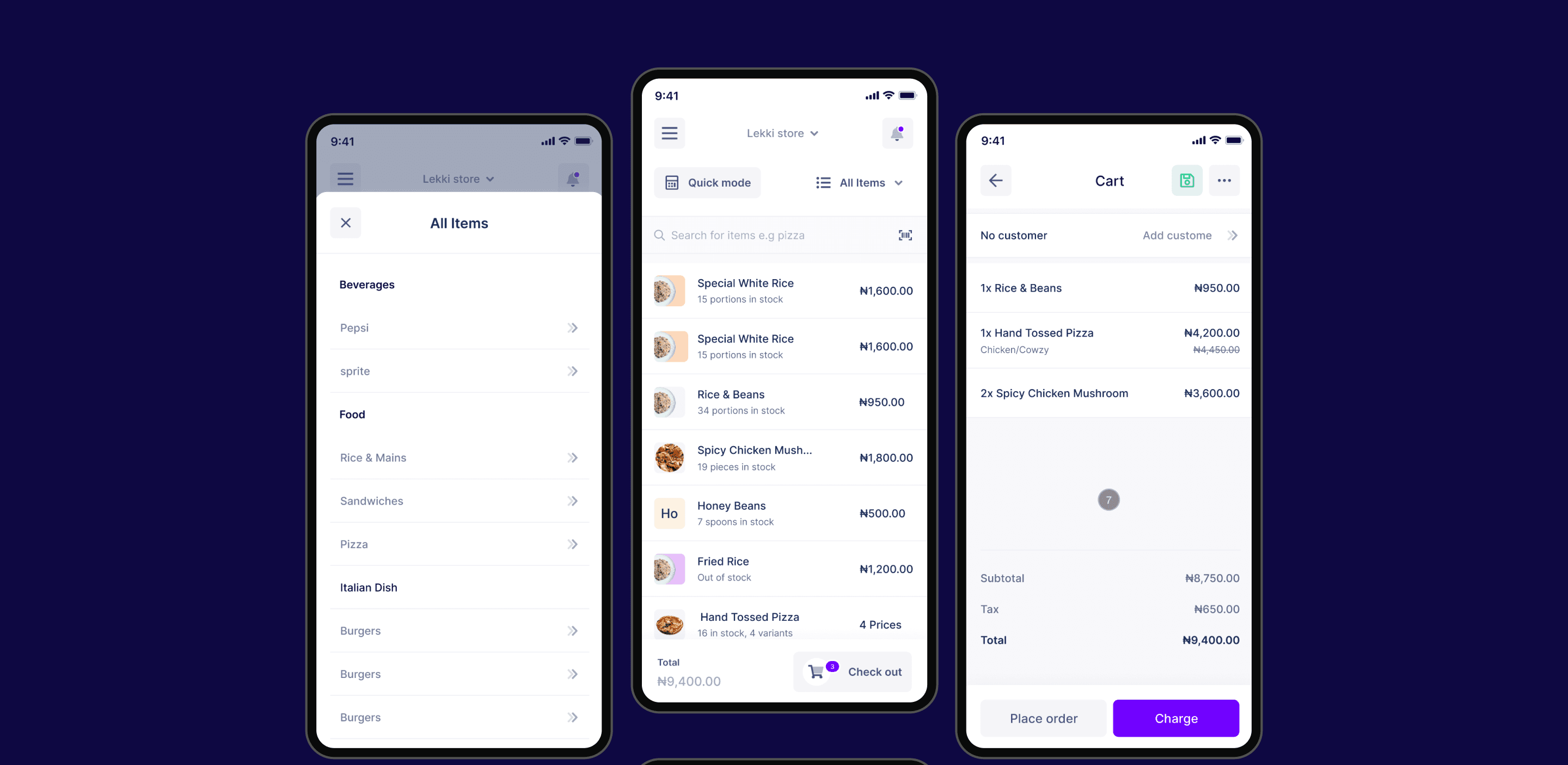
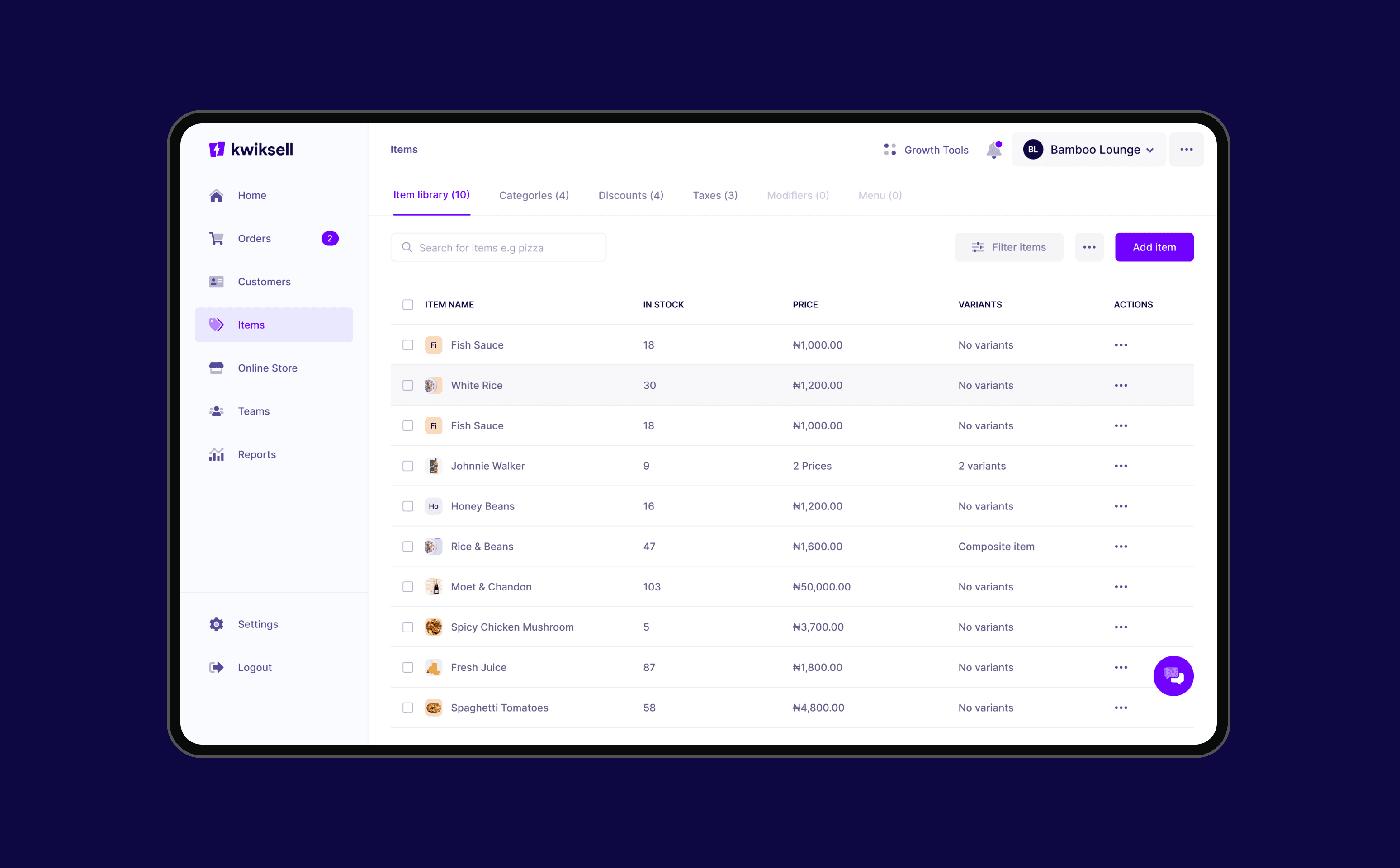
Merchants can manage their inventory, create categories and subcategories to organize products, apply discounts at checkout, add taxes/VAT to sales, and create modifiers and menus for restaurants.
The Item module offers a variety of features for merchants, including adding and updating items, viewing stock histories, copying checkout links for products, managing multiple inventory locations, and handling variant and composite items.
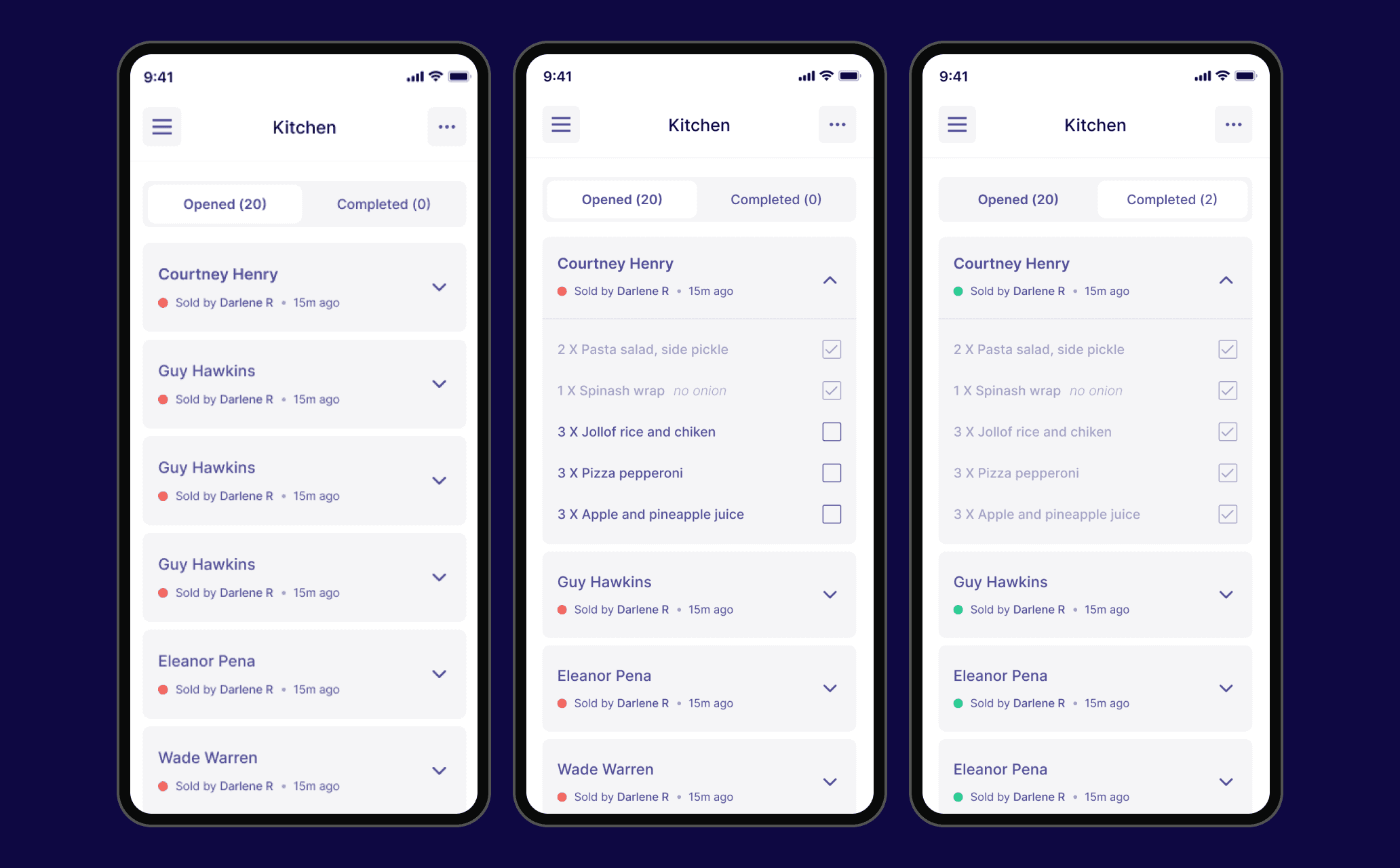
The kitchen display system (KDS) feature is available exclusively to businesses registered as restaurants. This feature helps waitstaff efficiently take customer orders and send them directly to the kitchen, minimising the risk of order mix-ups.
We launched a retail product that helped people grow their business which has raised over ₦2 billion in seed capital so far.
✅ 40% increase in acquisition
✅ 85% increase in engagement
✅ 100% Increase in transactions